
Quick Answer
The most common clogged downspout signs are water overflowing the gutter near the downspout, little or no water coming out the bottom during rain, standing water in the gutter after a storm, leaks at downspout joints, and pooling or erosion near your foundation. A dull thud when you tap the downspout usually confirms a blockage
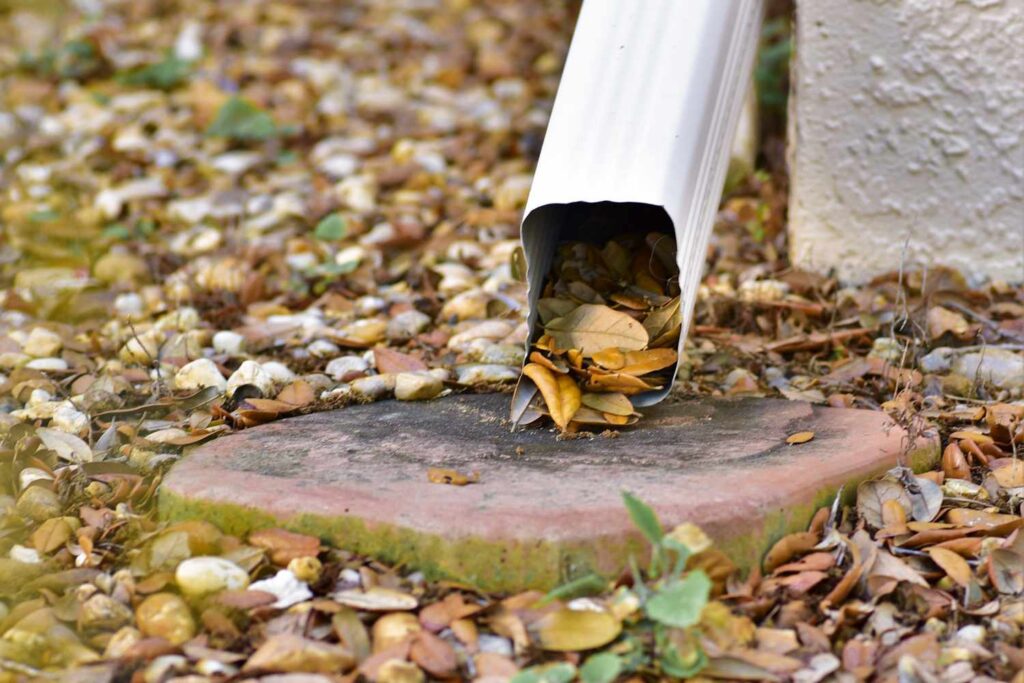
It is raining, your gutters should be doing their job, and then you spot a sheet of water pouring over the edge right above your front steps. That spill is often the first of several clogged downspout signs, and it rarely fixes itself.
A downspout is the vertical pipe that carries water from your gutter down to the ground and away from your home. When leaves, needles, or roof grit jam it, water has nowhere to go except over the gutter, onto your siding, and down toward your foundation.
In Columbia County, fir needles, maple seeds, and roof moss end up in gutters all year long. Below are the nine signs to watch for, how to confirm a clog, and when it makes sense to call a pro.
Why a Clogged Downspout Is a Bigger Deal Than It Looks
A downspout moves a surprising amount of water. According to the U.S. Geological Survey, one inch of rain falling on a 1,000 square foot roof produces roughly 620 gallons of runoff. Every one of those gallons has to leave through your downspouts.
When a downspout is blocked, that water backs up into the gutter, spills over the edge, and lands right at your foundation. Water weighs about 8.3 pounds per gallon, so a gutter holding trapped water also puts real strain on its hangers and on your fascia boards.
The 9 Clogged Downspout Signs at a Glance
| Sign | What you notice | Likely cause | Urgency |
|---|---|---|---|
| 1. Gutter overflow | Water spills over the edge during rain | Blocked outlet or downspout | High |
| 2. Weak or no flow | Trickle or nothing at the bottom | Clog inside the downspout | High |
| 3. Solid tapping sound | Dull thud instead of a hollow ring | Debris packed in a section or elbow | Medium |
| 4. Standing water | Gutter still full hours after rain | Water cannot drain out | Medium |
| 5. Leaking joints | Drips at seams and elbows | Backed-up water forced out | Medium |
| 6. Sagging gutters | Gutter pulls away near the downspout | Weight of trapped water and debris | High |
| 7. Plants or moss | Seedlings or moss in the gutter | Built-up organic debris | Medium |
| 8. Pooling or erosion | Wet soil, washouts, damp crawlspace | Overflow landing at foundation | High |
| 9. Pests | Mosquitoes, wasps, or nesting birds | Standing water and debris | Low to medium |
1. Water Spills Over the Gutter During Rain
Water overflowing the gutter near a downspout is the most common sign that the downspout is clogged. When the downspout cannot drain, water backing up in the gutter has only one exit: over the top.
Pay attention to where the overflow happens. If water pours over mainly at a corner or right above the downspout, the blockage is likely at the gutter outlet or inside the downspout. If water spills along the entire length of the gutter, the gutter itself may be full of debris or pitched the wrong way.
You may also see water stains, streaks, or peeling paint on siding and fascia directly below the overflow spot. Those marks are a record of repeat spills, even if you never saw them happen.
2. Little or No Water Coming Out the Bottom (Downspout Not Draining)
If rain is falling steadily but your downspout is not draining, something is stopping the water above. A healthy downspout produces a strong, steady stream during a normal rain.
Walk around your home during the next rainfall and look at each downspout outlet from the ground. A weak trickle, intermittent spurts, or no flow at all points to a partial or full blockage.
If your downspout connects to an underground drain pipe, the clog may be below ground. Signs of that include water bubbling up or spilling out where the downspout meets the buried pipe.
3. The Downspout Sounds Solid When You Tap It
An empty downspout rings hollow when you tap it, while a clogged section gives a dull, heavy thud. This quick tap test is one of the easiest ways to find exactly where a blockage sits.
Start near the bottom and tap your way up with your knuckles or the handle of a screwdriver. The spot where the sound changes is usually the top of the clog. Elbows, the angled bends at the top and bottom of a downspout, are the most common trouble spots because debris gets caught at the turn.
4. Standing Water in the Gutter After the Rain Stops
Gutters should drain within a few hours after rain ends, so water still sitting in them is a classic blocked downspout symptom. From the ground, you may notice water reflecting in the gutter or dripping from the edge long after the storm.
Standing water adds weight, wears down seams and sealant, and gives mosquitoes a place to breed. In colder months, it can also freeze and expand, which stresses gutter seams and downspout joints.
5. Leaks and Drips at Downspout Joints or Seams
When a downspout is packed with debris, backed-up water gets forced out through the joints, elbows, and seams. You might see drips running down the outside of the pipe or wet streaks on the wall behind it.
A leaking seam can be a separate repair issue, but when leaks show up at several joints on the same downspout, a clog is the more likely cause. Clear the blockage first, then check whether the leaks stop.
6. Gutters Sagging or Pulling Away Near the Downspout
A gutter that sags or pulls away from the house near a downspout is often carrying the weight of trapped water and wet debris. Hangers and fasteners are not designed to hold that load for long.
Left alone, sagging can bend the gutter, loosen fasteners, and damage the fascia board behind it. This is one sign where it pays to act quickly, because repair costs climb once wood starts to rot.
7. Plants, Moss, or Seedlings Growing From the Gutter
If you can see green growth in your gutters, there is enough rotting debris up there to clog a downspout. Seeds sprout in the damp, soil-like layer that forms when leaves and needles break down.
That composted material is exactly what washes into the downspout and packs the elbows. On Pacific Northwest homes, moss that sheds from the roof adds to the mix, especially on shaded north-facing slopes.
8. Pooling Water, Erosion, or a Damp Crawlspace Near the Foundation
Puddles, washed-out soil, or a trench along the drip line under your gutters usually means water is spilling over instead of flowing through the downspout. You may also see mulch pushed out of garden beds or mud splashed onto the bottom of your siding.
Overflow that soaks the ground next to your home can find its way into crawlspaces and basements. A musty smell, damp insulation, or new water stains below the floor are all worth investigating. The EPA notes that controlling moisture is the key to controlling mold indoors.
9. Mosquitoes, Wasps, or Nesting Pests Around Your Gutters
More pests than usual around your gutters can point to standing water and trapped debris caused by a clogged downspout. Mosquitoes breed in still water, and birds and rodents like to nest in piles of leaves and needles.
If you notice birds flying in and out of a gutter corner or insects hovering near the roofline, a blocked outlet is a good place to start looking.
| Seeing One or More of These Signs? NJM Roof & Gutter Cleaning clears gutters and downspouts for homeowners in St. Helens, Scappoose, Warren, and nearby Columbia County communities. Schedule Gutter Cleaning |
What Causes Downspouts to Clog in the Pacific Northwest?
Downspouts clog when debris washes out of the gutter faster than water can carry it down the pipe. In our area, the usual causes include:
- Fir and pine needles, which bridge across the gutter outlet and trap everything behind them.
- Maple seeds and fall leaves, which pack into elbows during autumn storms.
- Roof moss and lichen, which break loose and wash into gutters, especially after moss treatments.
- Shingle granules, the sandy grit that sheds from aging asphalt roofs and settles like sediment.
- Nests and debris from birds and rodents.
- Undersized or too few downspouts, which struggle to keep up during heavy rain, even when they are clean.
How to Confirm and Clear a Downspout Clog
If you are comfortable on a ladder and your home is a single story, you can often confirm and clear a simple clog yourself. Our full guide on how to clean gutters walks through the process in detail. Here is the short version:
- Watch during rain. From the ground, note which downspouts overflow or barely drain.
- Set up safely. Use a stable ladder on level ground, wear gloves, and have someone spot you.
- Clear the gutter outlet. Scoop out debris sitting over the opening at the top of the downspout.
- Tap to locate the clog. Work from the bottom up and listen for the dull sound.
- Flush with a garden hose. Run water down from the top. If it backs up, the clog is still there.
- Remove the bottom elbow if needed. Many clogs sit in the lower bend and can be pulled out by hand.
- Use a plumber’s snake for stubborn clogs. Feed it gently to avoid denting or splitting the pipe.
- Test the flow. Run the hose again and confirm a strong, steady stream at the bottom.
When to Call a Professional
A quick flush fixes many minor clogs, but some situations are better left to a gutter cleaning crew. Call a pro when:
- Your home is two stories or taller, or the roof is steep.
- The clog is in an underground drain line.
- The same downspout clogs again within a few weeks.
- Gutters are sagging, pulling away, or leaking at several points.
- You see signs of water getting into your crawlspace or basement.
Our professional gutter cleaning service includes clearing the gutter runs, flushing every downspout, and checking that water is flowing freely before we leave.
How to Prevent Downspout Clogs
Prevention comes down to keeping debris out of the gutters and making sure water has an easy path away from your home.
- Clean gutters at least twice a year, typically in late fall and again in spring. Homes surrounded by firs or maples may need more frequent cleaning.
- Check after big windstorms, which can dump a season’s worth of needles in one night.
- Add outlet strainers or downspout screens to catch debris before it enters the pipe, and clear them regularly.
- Trim overhanging branches to cut down on leaves, needles, and seeds.
- Keep roof moss under control so less of it ends up in your gutters.
- Consider larger 3×4 inch downspouts if standard 2×3 inch pipes cannot keep up.
- Use extensions or splash blocks so water discharges several feet away from your foundation.
Frequently Asked Questions
How do I know if my downspout is clogged?
The clearest signs are water spilling over the gutter during rain, little or no water coming out the bottom of the downspout, and standing water in the gutter after the rain stops. Tapping the downspout can confirm it: a clogged section sounds dull and solid instead of hollow.
Why is my gutter overflowing if the downspout looks fine?
The blockage may be hidden inside the pipe, usually in an elbow, or right at the gutter outlet where you cannot see it from the ground. Overflow along the whole gutter can also mean the gutter itself is full, pitched incorrectly, or too small for the roof area it serves.
Can a clogged downspout cause foundation damage?
Yes. A clogged downspout sends roof runoff over the gutter and onto the soil right next to your home. Over time, that repeated soaking can cause erosion, wet crawlspaces, and moisture problems that lead to mold and wood rot.
How often should downspouts be cleaned?
Downspouts should be checked and flushed every time the gutters are cleaned, which for most homes means at least twice a year. Homes near evergreen or maple trees in the Pacific Northwest often benefit from more frequent service.
Can I unclog a downspout without a ladder?
Sometimes. If the clog is near the bottom, you can remove the lower elbow and flush upward with a garden hose. Clogs at the top or at the gutter outlet usually require ladder access to clear completely.
What happens if I ignore a clogged downspout?
Ignoring it usually leads to repeated overflow, sagging gutters, damaged fascia, stained siding, and water pooling at your foundation. Small clogs also tend to grow as more debris washes in with each storm.
Key Takeaways
- Overflow near the downspout and weak flow at the bottom are the two strongest clogged downspout signs.
- A dull sound when you tap the downspout helps pinpoint where the clog is.
- Standing water, leaky joints, sagging gutters, and pooling at the foundation mean the problem has been building for a while.
- Regular gutter cleaning is the best way to keep downspouts flowing, especially under Pacific Northwest trees.
| Keep Water Moving Away From Your Home Book a gutter and downspout cleaning with NJM Roof & Gutter Cleaning, your local, licensed crew in St. Helens, Oregon. CCB #252799. Get a Free Quote |
