TL;DR: How do I know if my siding needs cleaning?
Your siding needs cleaning if you see a green or black film, dark streaks under the gutters, a dirty band along the bottom boards, cobwebs in the eaves, or color that looks dull but brightens when wiped. In western Oregon, most homes need a soft wash every one to two years, and shaded walls often need it yearly.
Most homeowners never notice dirty siding until the house next door gets washed. The change is slow. A little more green on the north wall each winter, a few more streaks under the gutters, and one day the whole house looks older than it is.
The good news is that the signs siding needs cleaning are easy to spot from your own driveway, and many of them point to a cleaning job, not a repaint. Below are the seven dirty siding signs our crew sees most often on homes in St. Helens, Scappoose, and the Portland metro area, plus a 30-second test you can do yourself and the cases where washing will not fix the problem.
Key takeaways
- Green film, black speckles, gutter streaks, and a dirty bottom band are the four most common visual signs a house needs washing.
- A simple wipe test tells you whether faded siding needs washing, painting, or neither.
- Siding should be soft washed at low pressure. High pressure can drive water behind the boards.
- Most western Oregon homes need a house wash every one to two years, ideally between late spring and early fall.
Table of Contents
The 7 Signs Your Siding Needs Professional Washing
Most houses show more than one of these at a time. Walk around all four sides, because the wall you rarely see is almost always the worst one.
1. A Green Film on Shaded Walls
A green or olive film on siding is algae, and it is the most common sign an Oregon house needs washing. It usually shows up first on north-facing walls, behind shrubs, and in narrow side yards where the siding stays damp for weeks at a time. Rub it with a finger and it leaves a green smear.
Algae is mostly a cosmetic problem at first, but it holds moisture against paint, caulk, and trim, and it spreads a little further each wet season. If you want to know why it is growing on your house in the first place, our guide to why siding turns green in Oregon breaks down 18 common causes.
What to do: Wash the whole house, not just the green wall, and fix whatever keeps that wall wet.
2. Black or Gray Speckles on Siding, Trim, or Soffits
Black, gray, or dark brown speckles on siding are usually mildew. They often look like pepper sprinkled on the paint and tend to cluster under eaves, on porch ceilings, and on painted trim that never sees direct sun. Many homeowners mistake them for ordinary dirt.
Painters use a simple check. Wearing gloves, dab a small hidden spot with a cotton swab dipped in diluted household bleach. If the speck lightens within a minute or two, it is likely mildew. If it stays the same, it is probably dirt. The EPA notes that mold and mildew need moisture to grow, which is why these spots keep returning on damp, shaded surfaces.
What to do: Use a cleaning solution that kills the mildew. Rinsing with plain water removes the top layer, and the spots come back.
3. Dark Streaks Running Down From the Gutters or Roofline
Vertical streaks beneath gutters or roof edges mean water is running down the face of your siding. The usual causes are gutters that overflow when they fill with fir needles, missing kickout flashing where a lower roof meets a wall, and runoff carrying roof moss debris onto the siding below.
The same problem often shows up on the gutter itself as dark vertical bands on the outside face. Washing removes the streaks from the siding, but if the gutters keep overflowing, the streaks will return. It is worth pairing the wash with gutter cleaning.
What to do: Wash the siding and gutter faces, then clear the gutters and check roof-to-wall joints.
4. A Dirty Band Along the Bottom Few Feet
A strip of mud, dirt, or green growth along the lowest rows of siding comes from splashback. Every rainstorm bounces soil, mulch, and bark dust off the beds and onto the wall. Downspouts that empty right at the foundation and sprinklers that hit the house make the band darker and wider.
This band is one of the easiest dirty siding signs to spot, because the rest of the wall often looks fine. It also tends to be the first place algae takes hold, since the bottom boards stay wet the longest.
What to do: Wash the siding, pull mulch back from the bottom edge, and extend downspouts away from the house.
| Seeing Green, Black, or Streaks? NJM Roof & Gutter Cleaning soft washes siding, trim, soffits, and fascia across Columbia County and the Portland metro area. Low pressure, plant-safe solutions, and every side of the house. Explore House Washing or call (971) 328-2122 |
5. The Color Looks Faded, but Brightens When You Wipe It
If your siding looks faded, wipe a small area before you call a painter. If the original color shows underneath, the house needs washing, not paint. A thin, even film of pollen, road dust, and early algae growth dulls siding so gradually that it reads as tired color.
We see this constantly. Homeowners get repaint quotes for houses whose paint is still in good shape under the grime. The wipe test below takes 30 seconds and can save you thousands of dollars in painting you do not need yet.
What to do: Do the wipe test on the dullest wall. If the patch comes up bright, book a house wash first and decide on paint afterward.
6. Cobwebs, Nests, and Debris in the Eaves
Heavy cobwebs, old nests, and grime along the soffits and eaves are a sign the upper parts of the house are overdue. Webs trap dust and pollen, so they show up as dark lines along the soffit and in the corners of porch ceilings and light fixtures. Bird droppings on fascia and trim are another common giveaway.
These areas are easy to forget, but they matter. A dirty soffit above freshly cleaned siding makes the whole house look unfinished. If you notice an active wasp or hornet nest, mention it when you ask for a quote so it can be dealt with safely before anyone works near it.
What to do: Include soffits, fascia, eaves, and porch ceilings in the wash, not just the siding.
7. It Has Been Over a Year, or You Are Planning to Paint or Sell
Even without obvious growth, most western Oregon homes need a house wash every one to two years. Algae and mildew start as a film you cannot see from the street, and they are much easier to remove at that stage than after several wet seasons.
Timing also matters. Paint sticks best to a clean surface, so most painters wash before they prime. If you are listing the house, a wash before listing photos is one of the cheapest ways to improve curb appeal. And washing before the rainy season starts gives your siding a clean surface heading into the months when algae grows fastest.
What to do: Schedule a wash between late spring and early fall, and before any painting or listing date.
The 30-Second Wipe Test for Dirty Siding
This is the quickest way to tell whether your house needs washing, painting, or neither.
- Pick the dullest wall you can safely reach from the ground, usually the north side.
- Dampen a white cloth or paper towel with plain water.
- Wipe a hand-sized patch with light pressure.
- Compare the cloth, the wiped patch, and the wall around it, then check the table below.
| What you see | What it usually means | Will washing help? |
|---|---|---|
| Green smear on the cloth | Algae growth | Yes. Soft wash the house. |
| Black or gray smudge, spots remain | Mildew | Yes, with a solution that kills it. |
| Gray or brown dirt | Pollen, dust, and road grime | Yes. |
| Wiped patch is much brighter than the wall | Surface film over intact color | Yes. Strong sign you need washing, not paint. |
| White or colored powder on the cloth | Chalking paint | A gentle wash helps, but plan for repainting. |
| Nothing comes off, wall still looks faded | UV fading or worn finish | No. Talk to a painter or siding contractor. |
Dirty Siding Signs at a Glance
| Sign | Likely cause | Urgency | Best next step |
|---|---|---|---|
| Green film | Algae on damp, shaded walls | Medium | Soft wash and reduce moisture |
| Black speckles | Mildew | Medium | Wash with a mildew-killing solution |
| Streaks under gutters | Overflow or roof runoff | Medium to high | Wash, then clean and check gutters |
| Dirty bottom band | Splashback from beds and downspouts | Low to medium | Wash and pull mulch back |
| Dull, faded look | Surface film or aging paint | Low | Wipe test, then wash or paint |
| Cobwebs in eaves | Spiders, nesting, trapped dust | Low | Include soffits and eaves in the wash |
| Over a year since last wash | Film you cannot see yet | Low | Book a wash before the rainy season |
When Washing Will Not Fix the Problem
Washing solves a surface problem. Some signs point to something deeper, and it is better to know that before anyone puts water on the wall. Call a painter, siding contractor, or home inspector if you notice:
- Peeling, blistering, or flaking paint. A soft wash will not lift sound paint, but it can loosen paint that has already lost its grip.
- Soft, spongy, or rotting wood on siding, trim, or window sills.
- Cracked, warped, or buckled vinyl panels, which can let water in behind the siding.
- Water stains or musty smells inside near an exterior wall with heavy growth.
- Crusty gray-green lichen firmly attached to older wood, which is much harder to remove than algae.
A good house washing company should tell you before starting if they think any of these apply. At NJM, we point out paint that looks likely to lift so you are not surprised afterward.
When to Wash Your House Exterior in Oregon
Western Oregon stays damp from roughly October through May, so siding that goes into fall already dirty gives algae a head start. Washing in the drier months lets the walls dry quickly and starts the wet season clean.
Homes along the Columbia River, including St. Helens and Scappoose, deal with extra fog and morning dew, so shaded elevations there tend to need more frequent attention. You can read more about local conditions on our St. Helens house washing and Scappoose house washing pages.
Why Siding Should Be Soft Washed, Not Pressure Washed
Siding should be cleaned at low pressure because lap joints and seams are built to shed water running down, not water blasted sideways or upward. High pressure can push water behind the boards and into the wall, where it can take months to dry in this climate. It can also gouge cedar, strip paint, and crack older vinyl.
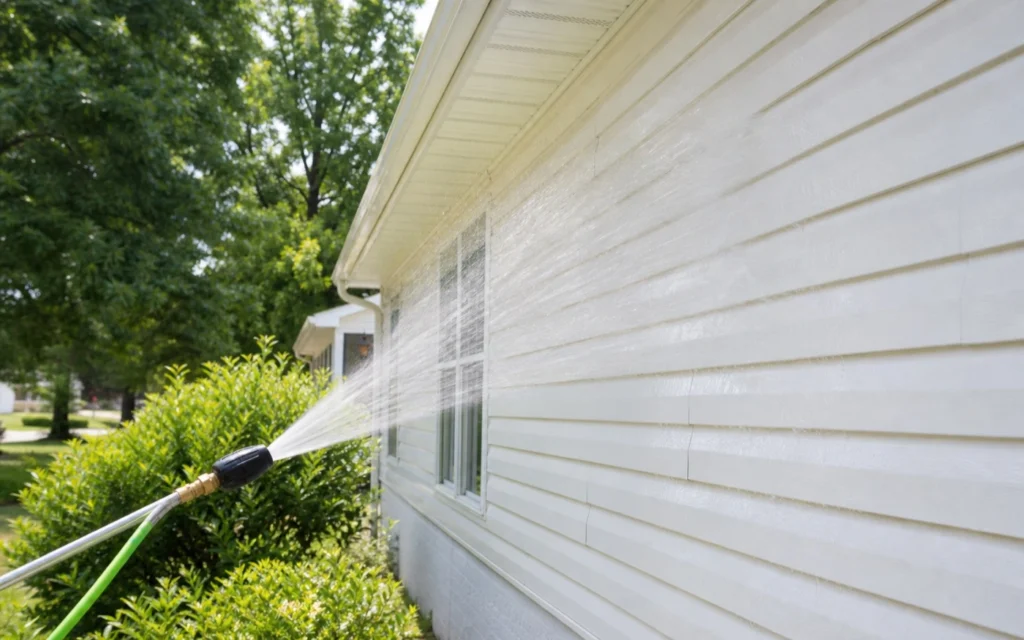
Soft washing uses roughly garden-hose pressure with a biodegradable cleaning solution that does the work while it sits on the surface. The Vinyl Siding Institute also advises caution with pressure washers on vinyl. Our soft wash house washing service adjusts the solution strength for vinyl, LP, Hardie, cedar, stucco, brick, and painted wood.
DIY or Professional House Washing?
Small, ground-level spots are a reasonable weekend job. A full house, especially one with a second story, is where most homeowners call a professional.
| Factor | DIY (hose, brush, store cleaner) | Professional soft wash |
|---|---|---|
| Best for | Small patches you can reach from the ground | Whole house, second stories, heavy growth |
| Kills algae and mildew | Depends on the product and dwell time | Yes, solution matched to the siding type |
| Ladder and chemical risk | Yours to manage | Handled by a licensed, insured crew |
| Plant protection | Up to you | Beds pre-wet before and rinsed after |
| Soffits, fascia, gutter faces | Often skipped | Included in the same visit |
Wondering what a professional wash costs for your home? Our Oregon house washing cost guide explains what affects the price.
How NJM Handles House Washing
NJM Roof & Gutter Cleaning is a licensed Oregon contractor (CCB #252799) based in St. Helens, fully insured, with a W-2 crew and a 4.9-star rating across 180+ Google reviews. Every house washing job covers all four elevations, trim, soffits, fascia, gutter faces, doors, and porch ceilings, with landscaping pre-wet before any solution goes on the wall.
Glass goes last, so if you want sparkling windows too, book window cleaning for the same visit. We serve St. Helens, Scappoose, Warren, Deer Island, Columbia City, Rainier, Clatskanie, the Portland metro area, and Vancouver, WA. See all service areas.
| Not Sure If Your House Needs a Wash? Send us photos of two or three sides of your home. We will tell you honestly whether it needs washing, painting, or nothing yet, and send a written estimate, usually the same day. Get a Free Quote or call (971) 328-2122 |
Frequently Asked Questions
How do I know if my house needs to be washed?
Look for green or black growth, streaks under the gutters, a dirty band along the bottom of the walls, cobwebs in the eaves, or siding that looks dull but brightens when wiped. These are the most common signs a house needs washing. If you see any of them, or it has been more than a year since the last wash, it is time.
How often should you wash the exterior of your house in Oregon?
Most western Oregon homes need a house wash every one to two years. Shaded lots, north-facing walls, homes under trees, and homes near the Columbia River or coast often need yearly cleaning on their worst sides.
What is the black stuff on my siding?
Black or gray speckles on siding are usually mildew, a type of mold that grows on damp, shaded surfaces. It is most common under eaves, on porch ceilings, and on painted trim. It needs a cleaning solution that kills it, not just a rinse.
Can dirty siding damage my home?
Dirt itself is mostly cosmetic, but algae and mildew hold moisture against paint, caulk, and wood trim, which can shorten their life over time. Streaks from overflowing gutters also point to water problems worth fixing. Learn more in our guide to why siding turns green.
Should I wash or repaint faded siding?
Wash first. Many houses that look like they need paint have sound color under a film of dirt and algae. Do a wipe test on the dullest wall. If the wiped patch is bright, washing will likely restore the look. If powder comes off or nothing changes, talk to a painter.
Can I pressure wash my own siding?
It is risky. High pressure can force water behind vinyl and lap siding, strip paint, and damage wood, and it often leaves living algae behind. A low-pressure soft wash with a siding-safe solution is safer and lasts longer.
What is the best time of year to wash siding in the Pacific Northwest?
Late spring through early fall is best, because walls dry quickly after cleaning. Washing before the rainy season starts in October gives your siding a clean surface for the months when algae grows fastest.
Does house washing include gutters and windows?
At NJM, house washing includes the outside faces of the gutters, but not cleaning debris out of them. That is a separate gutter cleaning service. Windows are also separate and are best booked for the same visit so the glass is cleaned last.
The Bottom Line
The clearest signs siding needs cleaning are green film, black speckles, gutter streaks, a dirty bottom band, dull color that wipes bright, and cobwebs in the eaves. Most of these are surface problems that a low-pressure soft wash can fix, often without the repaint homeowners expect. Check all four sides, try the wipe test, and wash every one to two years to keep your Oregon home looking its best.
| Ready to See Your Siding’s Real Color? Licensed, insured, and trusted by 180+ reviewers across Columbia County and the Portland metro area. Request Your House Washing Quote or call (971) 328-2122 |
