| Quick answer: To remove moss from your roof, apply a moss-killing solution, a 1:4 mix of bleach and water, or a commercial roof treatment, let it sit for 15–20 minutes, then gently sweep it off with a soft-bristle brush, working top to bottom, and rinse with a garden hose. Never use a pressure washer; it strips the protective granules off your shingles. The best time to do it is during the mild, dry stretches of spring or early fall. For heavy growth, steep roofs, or anything multi-story, a professional soft wash is safer and includes treatment that slows regrowth. In Oregon, professional roof moss removal usually costs $300–$600. |
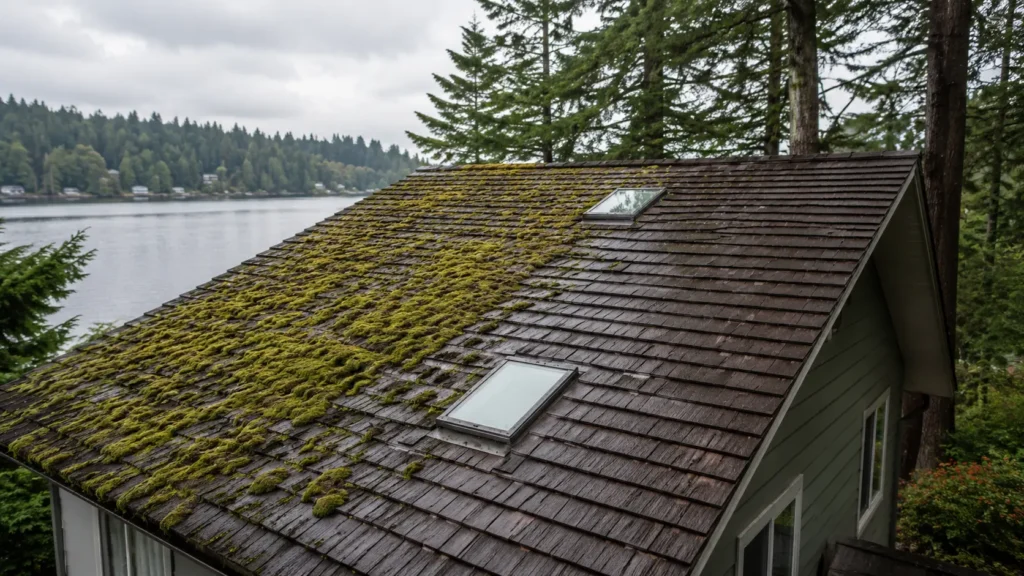
If you live anywhere in the Willamette Valley or the Portland metro, you already know the look: a soft green carpet creeping across the north side of the roof, thickening in the shade, quietly lifting your shingles one millimeter at a time.
Moss is practically the state plant of Oregon, beautiful on a forest floor, a genuine problem on your home. The good news is that removing it is straightforward when you do it correctly, and easy to get wrong in ways that cost you a roof.
This guide walks through how to remove roof moss safely, when to do it, what it costs, and how to keep it from coming back.
What is roof moss (and how is it different from algae)?
Moss is a non-vascular plant that grows in dense, spongy green clumps. It has no real roots, it anchors to the granular surface of your shingles and absorbs water directly, which is exactly why it loves a damp Oregon roof. As it grows, it holds moisture against the roof surface and wedges between shingles, and that is where the damage starts.
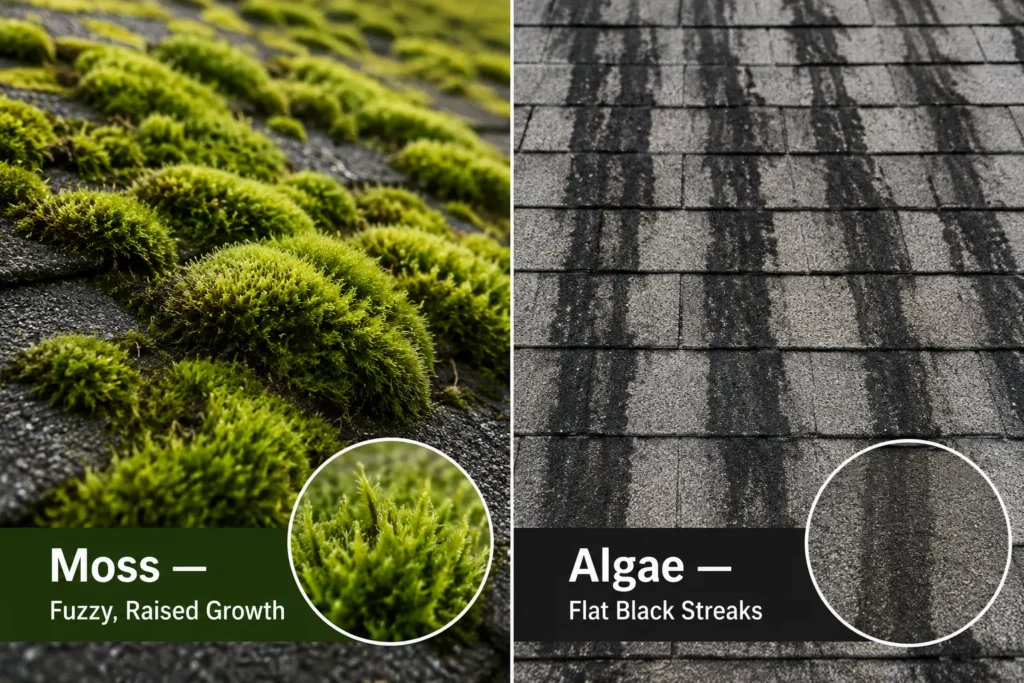
People often confuse moss with algae, but they are different problems with different fixes. Algae, usually a species called Gloeocapsa magma, shows up as flat black streaks or dark stains rather than fuzzy clumps, and it feeds on the limestone filler in asphalt shingles.
If your roof has dark streaks rather than raised green growth, that is an algae issue, and we cover it separately in our guide to black streaks and algae on Oregon roofs. Everything below is about moss specifically.
Why does moss grow so easily on Oregon roofs?
Oregon hands moss almost everything it needs. Four conditions stack up here in a way they don’t in most of the country:
- Constant rainfall. From Portland to St. Helens to Hillsboro, surfaces stay wet for much of the year, and moss thrives on persistent moisture.
- Mild temperatures. Our cool, moderate climate means water lingers instead of baking off, giving moss a long growing window.
- Heavy tree cover. Douglas fir, bigleaf maple, and alder shade roofs and drop debris that traps even more moisture.
- Coastal and valley humidity. Damp air keeps roofs and gutters from ever fully drying out.
This is also why the north-facing slope of your roof is almost always the worst, it gets the least sun, so it dries the slowest. If one side of your roof looks green and the other looks fine, that is the reason, not a defect.
Is moss actually damaging your roof? (Why it matters)
It is easy to dismiss a little green as cosmetic. It isn’t. Left alone, moss causes a chain of escalating problems:
- Shingle damage and leaks. Moss holds water against the roof and physically lifts shingle edges, letting water seep underneath. Over time that means rot in the decking and leaks inside the home.
- Clogged gutters and foundation risk. Moss sloughs off into your gutters and blocks them. When gutters overflow, water pools against your foundation — a problem we break down in detail in how clogged gutters affect your home’s foundation.
- A shorter roof lifespan. Persistent moisture accelerates wear and can shave years off a roof that should have lasted decades.
- Ice dams in winter. Moss traps snowmelt at the roof edge, which contributes to the ice dams we see during Oregon cold snaps — more on that in our Oregon ice dam prevention guide.
- Lower curb appeal and resale value. A green roof reads as “neglected” to buyers and can knock real money off your sale price.
When is the best time to remove roof moss in Oregon?
Timing matters more than people expect. The sweet spots are the mild, drier stretches of spring and early fall. Spring lets you clear out everything that thrived over a wet winter; early fall preps the roof before the rain returns. You want a dry window because moss treatments need time to sit and work without being rinsed away by the next shower, and because a wet roof is a dangerous place to stand.
Avoid the peak of summer (harsh sun degrades some solutions and bakes the roof) and steer well clear of winter ice. And never, ever work on a roof right after rain.
How to remove moss from your roof, step by step (DIY)
If your roof is single-story, low-pitch, and the moss is light to moderate, this is a reasonable DIY job. Here is the sequence that removes moss without harming your shingles:
- Suit up and set up safely. Wear gloves, eye protection, and non-slip shoes. Use a stable ladder on level ground, and have someone spot you. If the roof is steep, use a harness, or stop here and call a pro.
- Pre-wet the roof. Lightly wet the mossy areas with a garden hose. This softens the moss and stops your cleaning solution from soaking in too fast.
- Apply your moss-killing solution. Use a garden sprayer to coat the moss evenly. A 1:4 mix of chlorine bleach and water works, or a 1:4 white-vinegar-and-water mix for a gentler, more landscaping-friendly option. Soak the moss thoroughly but don’t flood the roof.
- Let it dwell. Give the solution 15–20 minutes to kill the moss and loosen its grip.
- Brush gently, top to bottom. Use a soft-bristle brush and always work downward — brushing up lifts shingles. You’re sweeping moss away, not scrubbing the roof raw.
- Rinse with a garden hose. Rinse thoroughly from the top down. Keep it to normal hose pressure — no pressure washer.
- Inspect and repeat if needed. Check for stubborn patches and re-treat those spots. Stubborn moss often takes a second pass.
What NOT to do (the mistakes that wreck shingles)
Most roof damage from moss removal is self-inflicted. Avoid these:
- Don’t pressure wash. High pressure strips the protective granules off asphalt shingles, forces water under them, and can void your shingle warranty. This is the single most common — and most expensive — mistake.
- Don’t scrub upward. Brushing against the shingle grain lifts and cracks them.
- Don’t use harsh, undiluted chemicals. They damage shingles and kill the landscaping below your downspouts.
- Don’t work a wet, steep, or multi-story roof yourself. Falls are the real danger here, not the moss.
How do you stop moss from coming back?
Removing moss is only half the job, in Oregon it will return unless you change the conditions it loves. The most effective preventive steps:
- Install zinc or copper strips. Mounted near the ridge, they release trace metal every time it rains, which is toxic to moss and suppresses regrowth across the slope below.
- Trim overhanging branches. More sunlight and airflow means a faster-drying roof and far less moss.
- Keep your gutters clear. Clogged gutters back water onto the roof edge and feed moss. Regular gutter cleaning is one of the cheapest forms of moss prevention there is.
- Schedule an annual roof inspection. Catching growth early keeps a quick treatment from turning into a repair.
- Consider a preventive treatment. A professional moss-inhibiting application every year or two keeps roofs clear with far less effort than repeat removals.
DIY vs hiring a pro: when should you call NJM?
DIY is fine for light moss on an accessible roof. Call a professional when the moss is heavy and well-established, when the roof is steep or multi-story, or when you’re seeing signs of rot or lifted shingles, at that point you’re risking both your safety and the roof itself.
This is where soft wash roof cleaning earns its keep. Instead of pressure, it uses low-pressure application of biodegradable solutions that kill moss at the root and protect the shingles, the method most roofing manufacturers actually recommend.
At NJM Roof & Gutter Cleaning, we’re licensed (Oregon CCB #252799) and carry $1M in liability coverage, our crews are local and owner-operated out of St. Helens, and our moss treatments come with a regrowth warranty, if treated moss comes back within the warranty window, we re-treat it.
How much does professional roof moss removal cost in Oregon?
Professional roof moss removal in Oregon typically runs $300 to $600 for a standard residential home. What moves the number: the size and pitch of your roof, how severe and well-established the moss is, and how accessible the roof is.
Heavily overgrown or steep roofs sit at the higher end; a light treatment on a single-story home sits at the lower end. Because soft washing includes treatment that slows regrowth, the real value is measured over years, it’s far cheaper than the repairs that neglected moss eventually forces.
Want an exact figure for your home? Get a free, no-obligation quote, text us a couple of photos of your roof and we can often price it the same day.
Roof moss removal across the Portland metro & Columbia County
We’re based in St. Helens and serve homeowners throughout Columbia County and the Portland metro. If moss has taken over your roof, we offer professional roof cleaning and moss removal in St. Helens, Scappoose, Portland, Hillsboro, Beaverton, Warren, Deer Island, and Wilsonville, plus the surrounding communities. If you’re within about 30 miles of St. Helens, we can almost certainly help.
Frequently asked questions
Should I worry about moss on my roof?
Yes. Moss traps moisture against your shingles, which leads to lifted shingles, leaks, wood rot, and a shorter roof lifespan. It’s worth addressing before it spreads.
Does vinegar or bleach remove roof moss?
Both work. A 1:4 bleach-to-water mix is effective; a 1:4 white-vinegar-to-water mix is a gentler, more landscaping-friendly option. Apply, let it dwell 15–20 minutes, then brush gently and rinse.
Can I pressure wash moss off my roof?
No. Pressure washing strips the protective granules from asphalt shingles, drives water underneath them, and can void your warranty. Always use a soft-bristle brush and a garden hose, or a professional soft wash.
What’s the best time of year for moss removal in Oregon?
The mild, dry stretches of spring and early fall. You want dry weather so the treatment can work, and you should never clean a wet or icy roof.
How much does roof moss removal cost in Oregon?
Most homeowners pay $300–$600, depending on roof size, pitch, moss severity, and access.
How long does roof moss removal last?
Professional moss removal generally lasts one to three years, depending on your roof, tree cover, and whether you take preventive steps. We cover this in detail in how long roof moss removal lasts in Oregon.
What’s the difference between moss and algae on a roof?
Moss is thick, raised green growth that traps moisture; algae is flat black streaking that stains shingles. They need different treatments — see our guide to roof algae and black streaks.
Does moss grow on other surfaces too?
Yes — driveways, walkways, and pavers are common in our climate. If that’s your issue, here’s how to remove moss from a driveway.
What should I do after removing moss?
Clean your gutters, inspect the roof for any damage, trim overhanging branches, and consider zinc/copper strips or a preventive treatment to keep it from returning.
| Don’t let moss quietly take years off your roof. Whether you want it handled this week or just want to know what it’ll cost, get a free quote from NJM or contact our St. Helens team — licensed, insured, 5-star rated, and backed by a regrowth warranty. |
