Quick Answer
Professional roof moss removal in Oregon typically lasts 1 to 3 years, depending on your roof type, surrounding tree coverage, local climate conditions, and whether preventive treatments like zinc strips or chemical inhibitors are applied. In heavily shaded areas of Western Oregon, moss can return within 12 months without ongoing prevention. With a proper maintenance plan, you can extend moss-free results to 3+ years.
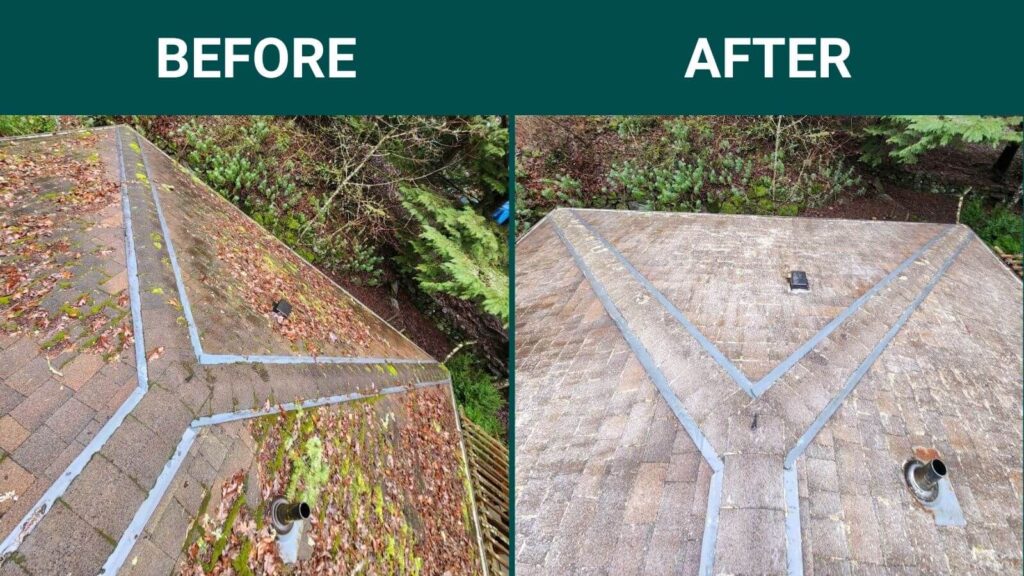
If you live in Oregon, you already know the struggle. That fuzzy green blanket creeping across your roof is more than a cosmetic problem. Left unchecked, moss traps moisture against your shingles, accelerates granule loss, and can lead to thousands of dollars in roof damage.
So you invest in professional soft wash roof cleaning. But the question every Oregon homeowner asks next is the same: how long will it actually last?
The answer depends on several interconnected factors, from your roof’s orientation to the specific treatment method used. This guide breaks down the real-world durability of roof moss removal in Oregon, what shortens or extends that timeline, and how to get the most value from every treatment.
Why Moss Thrives on Oregon Roofs
Oregon provides the perfect conditions for roof moss growth. The state receives an average of 27 to 70+ inches of rainfall per year depending on location, with Western Oregon communities like Portland, Salem, and Eugene receiving the heaviest precipitation. Combine that with mild winter temperatures that rarely drop low enough to kill moss spores, and you have a year-round growth environment.
Moss does not have roots in the traditional sense. Instead, it attaches to rough surfaces and absorbs moisture directly through its leaves. Composition shingles with their textured granule surface provide an ideal substrate. Once established, moss holds water against the roof surface like a sponge, which accelerates shingle deterioration and can eventually cause leaks.
The Willamette Valley, Coast Range, and areas around the Columbia River Gorge are especially prone to rapid moss regrowth due to persistent fog, cloud cover, and dense tree canopy. Oregon’s wet winters also increase the risk of ice dams, another condition that compounds roof damage when combined with moss growth.
How Long Does Professional Moss Removal Last?
The durability of a professional roof moss removal largely depends on the treatment approach and your property’s specific conditions. Here is what Oregon homeowners can generally expect:
| Treatment Method | Duration | Best For |
| Manual Removal Only | 6–12 months | Immediate visual improvement; budget-conscious homeowners needing a quick fix before selling |
| Chemical Treatment (zinc sulfate/copper-based) | 1–2 years | Moderate moss infestations; balance of cost and longevity |
| Manual Removal + Chemical Treatment | 1.5–3 years | Heavy infestations where both visible moss and spores need addressing |
| Full Treatment + Zinc Strips Installed | 2–4+ years | Long-term prevention; best overall protection investment |
| Full Treatment + Annual Maintenance Plan | 3–5+ years | Maximum longevity; keeps roof consistently moss-free year-round |
These timelines assume typical Oregon conditions. Properties with heavy shade, north-facing roof sections, or proximity to bodies of water may see faster regrowth. Conversely, well-maintained roofs with good sun exposure can stay moss-free longer than the ranges above.
7 Factors That Affect How Long Moss Removal Lasts in Oregon
1. Roof Material and Texture
Composition (asphalt) shingles are the most moss-prone roof material in Oregon because their rough granule surface gives moss an easy attachment point. Cedar shake roofs also develop moss quickly due to their porous, organic surface. Metal and tile roofs resist moss growth significantly better, and treatments on these surfaces tend to last longer. If you have asphalt shingles, expect to need more frequent retreatment than a metal roof homeowner.
2. Tree Coverage and Shade
This is the single biggest factor in moss regrowth speed. Roofs shaded by overhanging trees for most of the day stay damp longer, creating ideal conditions for moss spores to take hold. Oregon properties surrounded by Douglas fir, Western red cedar, or big-leaf maple often see moss return within a year of treatment if branches are not trimmed back. Trimming branches to maintain at least a 10-foot clearance from the roof can significantly extend treatment longevity.
3. Roof Orientation and Slope
North-facing roof planes receive the least direct sunlight in Oregon and are consistently the first areas where moss reappears after treatment. Low-slope roofs (3/12 pitch or less) drain water more slowly, extending surface moisture exposure. Steep-pitched, south-facing roof sections may stay moss-free two to three times longer than flat, north-facing sections on the same home.
4. Geographic Location Within Oregon
Western Oregon — including Portland, Eugene, Salem, Corvallis, and coastal towns — receives substantially more rainfall and cloud cover than Central and Eastern Oregon. The coast can see 70+ inches of rain annually, and the Willamette Valley averages around 40 inches. Bend, by comparison, receives about 12 inches. Moss removal in Western Oregon rarely lasts as long as the same treatment would east of the Cascades.
5. Treatment Method and Quality
Not all moss removal services are equal. A thorough professional treatment includes careful manual removal (without high-pressure washing, which damages shingles), application of a moss-killing solution, and ideally a preventive treatment. The industry-recommended approach is soft wash roof cleaning, which uses low-pressure water combined with biodegradable cleaning solutions to kill moss at the root without stripping shingle granules. Companies that only blow off the surface moss without addressing the root system and spores leave homeowners with much shorter results.
6. Preventive Measures Installed
Zinc or copper strips installed along the roof ridge are one of the most effective long-term prevention methods. When it rains, trace amounts of metal ions wash down the roof surface, creating an environment hostile to moss and algae growth. These strips can extend the time between professional treatments by one to three additional years. Some homeowners also benefit from annual spray applications of zinc sulfate as a preventive measure.
7. Gutter and Drainage Condition
Clogged gutters cause water to back up along the roof edge, keeping the lower shingle courses perpetually damp. This moisture accelerates moss regrowth in the areas where it often starts first. Maintaining your gutters through regular gutter cleaning is an often-overlooked factor that directly impacts how long your moss removal results will hold.
Western Oregon vs. Eastern Oregon: Treatment Longevity Compared
Oregon’s geographic diversity means moss removal results vary dramatically depending on which side of the Cascades you live on.
| Factor | Western Oregon | Eastern Oregon |
| Annual Rainfall | 35–70+ inches | 8–15 inches |
| Avg. Cloud Cover | 200–240 cloudy days/year | 120–160 cloudy days/year |
| Moss Growth Speed | Fast (visible in 6–12 months) | Slow (18–36+ months) |
| Treatment Longevity | 1–2 years (without prevention) | 2–4+ years |
| Recommended Retreatment | Annually or biannually | Every 2–3 years |
| Prevention Priority | Essential (zinc strips + sprays) | Helpful but less urgent |
Signs Your Roof Moss Is Coming Back
Even after professional treatment, moss will eventually return in Oregon’s climate. Catching regrowth early is the key to avoiding expensive repeat treatments. Watch for these warning signs:
Green discoloration on north-facing shingle surfaces is typically the first visible indicator. You may also notice thin, velvety patches forming in areas where water pools or drains slowly. Dark streaks along the lower edge of the roof, especially near clogged or slow-draining gutters, often indicate early-stage algae and moss colonization.
If you see moss patches thicker than a quarter-inch, the regrowth has moved beyond the early stage. At this point, a preventive spray alone may not be sufficient, and you may need a full retreatment.
The best practice is to inspect your roof from ground level every spring and fall. Binoculars can help you spot early growth before it becomes a larger problem. After any major storm, follow a post-storm gutter inspection routine to check for both gutter damage and early moss regrowth. If you notice significant water damage or overflow issues, don’t wait, schedule emergency gutter service before the problem compounds.
How to Make Your Roof Moss Removal Last Longer
You can significantly extend the lifespan of a professional moss treatment by combining several preventive strategies:
Install zinc or copper ridge strips. These release metal ions with each rainfall that inhibit moss and algae growth across the entire roof surface. Zinc strips are the most cost-effective long-term prevention method available in Oregon.
Trim overhanging tree branches. Maintain at least a 10-foot clearance between tree limbs and your roof to maximize sunlight exposure and airflow. This single step can add a year or more to your treatment’s effectiveness.
Keep gutters clean. Ensure your gutter system drains freely. Learn how to clean gutters properly or hire a professional. Backed-up water along the roof edge is one of the primary accelerators of moss regrowth at the eaves and lower shingle courses.
Schedule annual preventive spray treatments. A zinc sulfate or potassium-salt-based spray applied in early spring or late fall can prevent moss spores from establishing before they become visible growth.
Remove leaf debris regularly. Accumulated leaves, pine needles, and organic debris trap moisture against shingles. Regular roof blow-offs make a meaningful difference, especially during fall gutter maintenance season when debris is heaviest.
Address low-slope drainage issues. If sections of your roof have persistent standing water or slow drainage, consult a roofing professional about improving slope or adding drainage solutions.
What Does Roof Moss Removal Cost in Oregon?
Understanding cost in relation to treatment longevity helps you make smarter decisions about roof maintenance. Here are typical 2025–2026 price ranges for Oregon:
| Service | Typical Cost Range |
| Basic Moss Removal (manual scraping) | $250–$500 |
| Chemical Moss Treatment (spray only) | $150–$350 |
| Full Treatment (manual + chemical) | $400–$800 |
| Zinc Strip Installation | $200–$500 (one-time) |
| Annual Maintenance Plan | $150–$300/year |
| Complete Package (removal + zinc + maintenance) | $600–$1,200 first year |
When you consider that a full roof replacement in Oregon costs $8,000 to $20,000 or more, investing $400 to $1,200 per year in moss treatment and prevention represents significant long-term savings. A well-maintained, moss-free roof can also boost your home’s appraisal value if you’re planning to sell.
Frequently Asked Questions
How long does roof moss removal last in Oregon without prevention?
Without any preventive measures, roof moss removal in Oregon typically lasts 6 to 18 months in Western Oregon and 1 to 3 years in Eastern Oregon. The wetter, cloudier climate west of the Cascades accelerates moss regrowth significantly.
Does power washing remove roof moss permanently?
No. Power washing removes visible moss but does not kill spores embedded in shingle surfaces. It also damages asphalt shingles by stripping protective granules, which can shorten your roof’s overall lifespan. Understanding the difference between pressure washing and power washing is important when evaluating treatment options. Professional moss removal services use low-pressure methods combined with chemical treatments for longer-lasting results.
What is the best time of year for moss removal in Oregon?
Late spring (May–June) and early fall (September–October) are the ideal windows for roof moss treatment in Oregon. These periods offer enough dry weather for chemical treatments to adhere and work effectively. Avoid scheduling treatments during Oregon’s heavy rain season (November–March) when products may wash off before they take full effect.
Do zinc strips really work for moss prevention?
Yes. Zinc strips installed along the roof ridge release zinc ions when it rains, creating a chemical environment on the roof surface that inhibits moss and algae growth. They are most effective on smaller roofs or when installed in multiple rows on larger roofs. In Oregon’s rainy climate, zinc strips can extend the time between professional treatments by 1 to 3 years.
Will my homeowners insurance cover moss damage?
Most homeowners insurance policies in Oregon do not cover damage caused by moss because it is considered a maintenance issue. Insurance typically covers sudden, accidental damage, not gradual deterioration from deferred maintenance. This makes proactive moss treatment and prevention a wise financial decision.
How often should I treat my roof for moss in Portland, Oregon?
Portland homeowners with typical tree coverage should plan for professional moss treatment every 1 to 2 years. With zinc strips installed and annual preventive sprays, many Portland homeowners can extend this to every 2 to 3 years. Homes with heavy shade may need annual attention. Pairing moss treatment with gutter guards can further reduce maintenance frequency. Contact our roof cleaning services in Portland team for a personalized assessment.
Can I remove roof moss myself?
While DIY moss removal is possible, it carries risks. Using a pressure washer, stiff brushes, or improper scraping techniques can damage shingles, void warranties, and create safety hazards on sloped roofs. If you choose DIY, read our guide on how to safely clean a shingle roof and use a soft-bristle brush with an Oregon-approved moss treatment product. For best results and safety, professional treatment is recommended.
Protect Your Oregon Roof from Moss Damage
Your roof is one of the most expensive components of your home. In Oregon’s moss-friendly climate, proactive maintenance is not optional — it is essential to protecting your investment.
The most cost-effective approach is clear: start with a thorough professional moss removal, install zinc ridge strips for ongoing prevention, and maintain an annual treatment schedule. This combination gives Oregon homeowners the longest-lasting results and prevents the kind of damage that leads to premature roof replacement.
Ready to Get Started?
Contact us today for a free roof moss assessment. We’ll evaluate your roof’s current condition, recommend the best treatment approach for your specific situation, and provide a transparent quote with no hidden fees. Serving homeowners across Oregon.
